You are currently viewing: Ireland - English

Nowhere is healthy indoor air quality more important than in healthcare facilities. It’s critical in improving patient outcomes, infection control and staff productivity.
Trane collects data on the effects of building design and system performance on indoor air quality, lighting, moisture control, filtration, air cleaning, ventilation and temperature. Hundreds of scientific studies document the healthcare impact of factors including reduced noise and better ventilation.[1] Several specifically link air quality and infection rates.
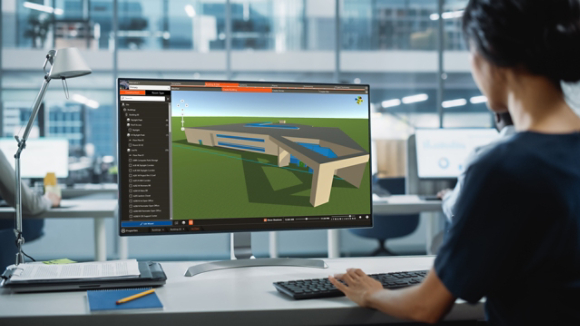
This knowledge informs our design and analysis tools, helping to create hospitals with the versatility, flexibility and comfort needed to meet a wide variety of patient and staff needs. This means Trane can help healthcare provide the highest indoor air quality, while also addressing regulatory requirements and managing costs throughout the life of the facility.
[1] The Role of the Physical Environment in the Hospital of the 21st Century: A Once-in-a-Lifetime Opportunity Roger Ulrich*, Xiaobo Quan, Center for Health Systems and Design, College of Architecture, Texas A&M University
Three of the four chillers serving Kingston General Hospital (KGH) were 30 to 40 years old with efficiencies of only 1.0 kWh per ton of cooling capacity. Even under the best conditions, the chiller plant was unable to meet peak cooling capacity. On several occasions scheduled surgeries were cancelled due to poor temperature control. In addition, hospital expansions were planned that would put even more strain on the aging chiller plant.
When SSM Healthcare announced plans to build SSM St. Clare Health Center to replace its aging St. Joseph Hospital of Kirkwood, it unveiled a bold vision: breakthrough results in satisfaction, patient safety, clinical outcomes and operating performance. Other key objectives were to increase market share and to adhere to tight budgetary compliance.
Franklin Memorial Hospital (FMH) recently completed renovation of its operating suites. Based on experience in controlling temperature and humidity, not only for comfort requirements but for proper operating room sterility, FMH wanted the latest in HVAC technology. Excessive humidity can require resterilising surgical kits, adding thousands of dollars of expense. Don Garrison, chief of facility management, says, "We always had problems being able to satisfy the surgeons, who wanted the temperature at 62-65 degrees, while the anesthesiologists and other staff wanted higher temperatures. It’s hard to satisfy everyone with air that has a lot of moisture in it.”